***Spoilers ahead for Twin Peaks S3E14 or earlier***
What's the deal with Sarah Palmer? It's a question that's been brewing since the first trailer for season 3 aired, showing her shopping the liquor aisle of a store. Viewers logically assumed this meant she's an alcoholic now. Who wouldn't be after what she's been through?
But after fourteen new episodes of Twin Peaks, we know for sure that Sarah isn't just an alcoholic who's gone off the deep end. We all saw her sit quietly and drink at home in one of Lynch's many drawn-out meditative scenes, and that seemed to reaffirm our idea that she had a drinking problem and now leads a sad, lonely life.
Then in S3E12 we finally see the full scene from which our sad alcoholic vision of Sarah was born from.
"Jerky freak-out" has become one of my favorite fan-made phrases to come out of the show.
We can tell that Sarah might have some kind of dementia mixed with a bit of paranoia and maybe ptsd. Or she's possessed and barely holding onto her sense of self. How did she become possessed?
In S3E13 she's doing the same drinking in front of the TV shtick.
I noticed that both times we see Sarah watching TV at home she is:
a) drinking
b) watching violence (first it was lions attacking a water buffalo, then it was an old-timey boxing match)
c) the movies are in black & white. The animal documentary was probably in night vision, not black & white film, but it still had no color either.
Twin Peaks S3E2
Twin Peaks S3E13
It's all very symbolic of her new self. We can see it come together in the now infamous scene from S3E14, where she takes off her face to reveal a black & white nightmare. Then she bites the throat out of a dude.
The vision of a hand in her face is symbolic of what Gordon Cole once said about "the spiritual mound." He identifies it as the ring finger. In this case that finger is decidedly black. She is rotten to the core. Sarah Palmer is a full-blown demon now. How did it come to this? Did we miss something? It could all be events that occurred off screen before Season 3 begins, but I believe there was proof of her direct link to the spirit world in the last episode of Season 2.
This is the last scene in the Twin Peaks universe timeline before we see Sarah Palmer in season 3:
(skip to 1:18)
Under the care of Dr. Jacoby, Sarah is lead to Major Briggs to give him a message. In a distorted and deepened voice she says "I'm in the black lodge with Dale Cooper." At this point in the episode there are a few people in the Black Lodge with Dale Cooper. BOB, Windom Earle, Annie Blackburn, The Arm, Mike, Leland, Laura Palmer - and all their doppelgangers! Who's to say which one was using Sarah as a mouthpiece?
Sarah's burden on Twin Peaks was that she could see BOB. It always seemed to happen right when she was about to get some peace for once, and then bam! Sarah was in a tizzy again. Since she had such an ability, Leland would drug her while he was under BOB's control so he could commit his horrid acts. Before each drugging kicked in she would see a white horse, which is a symbol that has come up numerous times.
from the original run of Twin Peaks
from Fire Walk With Me
from Twin Peaks: The Return
In Season 3 one of the woodsmen says "the horse is the white of eyes." I haven't completely figured this one out, but it's all linked for sure.
The scene from the last episode of season 2 is of course after Leland's death. There is no one left to drug her. Because of this she might be more susceptible to spirits using her as a conduit, and it's gotten out of hand at this point. Even Phillip Gerard can use drugs to stave off his alter ego, Mike. As the Giant once said, "Without chemicals, he points."
Considering this is the absolute last scene with Sarah Palmer before Season 3, with no indication that Sarah went back to normal per se, we can assume that whatever was inside her in that moment didn't leave.
What is that noise? And why aren't more people talking about it? This strange creaking sound can be heard through out Fire Walk With Me and can also be heard in the new season of Twin Peaks. We can tell that it signifies mischief from the Black Lodge, but how did Lynch and Badalamenti create the sound themselves?
Watch below to find out:
Also this is my first YouTube video ever! I hope to make more in the future in conjunction with this blog. Please like and subscribe!
Spoiler alert for the entire Twin Peaks Universe up until episode 8 of the 3rd season.
1. Season 2 Episode 7: "Lonely Souls": Maddy's Death Scene
This happens to be the episode that was my introduction to Twin Peaks. I came upon this episode airing on Bravo during the summer of 2000. I had only heard about Twin Peaks from my parents after asking them about a parody scene from an episode of The Simpsons titled "Lisa's Sax" which has a segment about what life was like in 1990. It showed Homer drinking Crystal Pepsi and watching Twin Peaks, in which The Giant is dancing with a white horse under a stoplight hanging from a tree (sounds about right). I asked my parents what that was, and what they described to me gave me chills. It wasn't until a year or two later that I actually got to see it for myself.
The Norwegians bouncing balls in the lobby of the Great Northern while Phillip Gerard has a total meltdown is what kept me from changing the channel. I had no clue what was going on, but it was captivating. What I saw towards the end of the episode was truly chilling, and to this day fills my body with such an emotion that is hard to describe. It makes me want to cry but not out of sadness.
Below is the video clip of the scene. The episode has the white horse I was promised on The Simpsons, appearing to Sarah Palmer before she passes out. It also has The Giant, creepily repeating to Agent Cooper, "It is happening again." referring to Maddy being killed by Bob. In retrospect it's a crazy episode to begin Twin Peaks because it reveals who Laura's killing is. I wouldn't say it ruined it for me, though.
The sound editing is beyond compare for this episode. There's the sound of the needle at the end of the spinning record, and the way the screams of Maddy are slowed down and deepened to this roar that mimics Bob's deep laugh. The slow motion also creates dread like in a dream when you are running from someone and you feel like you can barely move. It was the most horrifying thing I had seen on TV. It's still up there on my list to this day.
2. Season 2 Episode 22 : "Beyond Life and Death" : The Sycamore Trees
The final two episodes of Twin Peaks were directed by David Lynch, as apposed to many of the previous episodes of season two. You can really tell. From the bank vault scene that creeps along in real time as the elderly banker shuffles, to Sarah Palmer giving a message to Agent Briggs in her demonic possessed voice, Lynch took over for a last hurrah.
The scene that really kept me from sleeping, was Agent Cooper's introduction to the Black Lodge (or Waiting Room depending on your view). Cooper has entered the red room from his dream. Then the room dims and the dreadful strobe light comes on. A singer begins to croon into an old style microphone. That singer is played by Jimmy Scott who has an unusual voice due to a condition that prevented his body to go through puberty, making his voice higher than one would expect.
At the time I saw this I was unsure of why his voice was high. I thought maybe it was actually an elderly woman dressed in a suit singing (why not?). Never the less the sound of his voice and the sorrow and foreboding in the song chilled me to the bone. Especially the line "I'll see you, and you'll see me." It's unsettling to me because it doesn't say "we'll meet" or give any other direct action of what they will do when they are together again. It leaves it ambiguous. It implies that these people will see each other and then they will both just know what's going to happen. They will just look at each other - maybe for a long and creepy amount of time, doing and saying nothing. It just makes me want to cry out of fear again.
3. Fire Walk With Me: Fat Trout Trailer Park Scene
Sometimes I feel silly with what scares me in Lynch's work. For instance, in Mulholland Drive I cannot watch the Winky's Diner scene without closing my eyes. I could go on about why that scares me to pieces, but that's for a different post all together. When I describe it to people it sounds so trivial being afraid to look at the gross homeless person behind the wall, and he/she doesn't even come around the corner fast. It's really the sound editing and the shock that something actually was there. So it shouldn't even be a shock to me in subsequent viewings since I know the outcome, but I still can't bare to see it.
Anyway, in similar fashion, in FWWM when Chester Desmond and Sam Stanley are talking with Carl Rodd, owner of the Fat Trout Trailer Park, you see the camera outside the trailer almost running toward the door. You hear that unsettling whooshing sucking sound. Then from inside the trailer you see a short, hunched over, filthy old woman with a water bottle/ice pack over her right eye. She peeks around the door frame. Chester Desmond acknowledges her, as if she's a typical person - and not a demon like I would think. Meanwhile Carl Rodd is staring at her blankly, and goes into a trance. After she leaves, backing out of the doorway and not answering Desmond's question, Carl goes on about how he's "already gone places" and doesn't want to go anywhere. No one even suggested that to him, but the presence of this woman seems to set him off. It has always upset me to see this. It's a perfect representation of the horror within the random and unknown.
A close runner-up in that segment would be when Chester Desmond returns to the trailer park to inspect the Chalfont trailer. It's crazy creepy how the lights are on in the trailer, some of the curtains are drawn so we could see someone in there if we wanted to, but no one answers the door. I kept waiting for someone to pop their head in the window when he wasn't looking. It doesn't happen but the tension is so strong. Lynch does a great job of making empty rooms sinister and charged with dread.
4. Season 3 Episode 2: "The stars turn and a time presents itself": Bill Hastings's Cell Mate
The new season has not disappointed. It may not be in the same style as the original series but I am ok with that, as I thought a lot of Twin Peaks (especially season 2) was hokey anyway. This season is Lynch full throttle, and I need him to do whatever he wants.
The first thing that truly made me go "Oh hell no" happened in episode 2 titled "The stars turn and a time presents itself." In the jail where Bill Hastings is being held after he's charged with murder, the camera pans right to view the other cell. As Bill is crying, lamenting his situation, it is brought to our attention that he is not alone. In the other cell is a man dressed in black and painted black, sitting sideways and a little tilted, his face looking up. His eyes are very wide and the white of his eyes is jarring compared to his black body. He is so still, frozen, petrified. What is he doing? He fades away - which is never fun to see. Jimmy Scott faded away at the end of his song, and The Giant faded away when he was done telling Cooper "It's happening again." So obviously it's terrible.
I'm gonna delete this image from my computer as soon as I post this.
Then we see a second later, his head fly away like a poorly rendered ghost. That shot sort of cuts the tension of seeing this gravely disturbing figure. It's one of the first scenes that reminds us this is a Lynch production so things are gonna get weird. Until then the scene that played out was more of the soap opera Lynch, filled with intentionally bad acting (just Phyllis Hastings, not Bill. Mathew Lillard was very good). Then we get that seemingly unwarranted, otherworldly visage.
5. Season 3 Episode 8: "Gotta Light": All of it, but mostly Evil Cooper's helpful woodsmen
Episode 8 blew everyone's minds. The atomic bomb scene was breathtaking. It was an obvious homage to Stanley Kubrick's 2001: A Space Odyssey between the sound track and the visuals. This moment was so monumental because it made me suspend my disbelief for a moment, and I was in awe, thinking that I bared witness to the inside of an atomic bomb blast. Of course no one can really know what that looks like, and this was just an artistic representation, but it was so well done that it sucked me in and moved me.
What really terrified me though, was the introduction to my worst nightmare from Episode 2, times eight. The man painted black, which viewers began referring to as "the woodsman" became "the woodsmen" as several of them creep out of the woods when Evil Cooper is shot by Ray. They amble about, and spread Cooper's own blood from the wound all over his face. The sounds and music are creepy. Ray has been rendered helpless and slow-mo - just like Maddy when she encounters Bob.
Then during the atomic bomb sequence we see them milling about in sped up motion (both slow motion and fast motion are scary, trust me). They're inside and outside the convenience store which seems to be in New Mexico (we see the same one later when the teens are walking in 1956 also in NM). If this is the Black Lodge I'm unsure about how it ties into what Phillip Jeffries said in FWWM, since he implies that the convenience store/Black Lodge was in Seattle, WA. I don't know the answer to this, but we are dealing with some time travel and other dimensions, so... All I know is that movements and appearance of these woodsmen is the worst thing I've seen in a while.
When the Woodsmen come down from the sky and one of them goes around town asking for "a light" and crushing heads, it's still not as scary as when they sit way too still, move too slow, or move too fast. When their movements and motions are odd, their intentions are ambiguous and therefore terrifying.
There's ten more episodes of season 3, so I might have to make another list later!
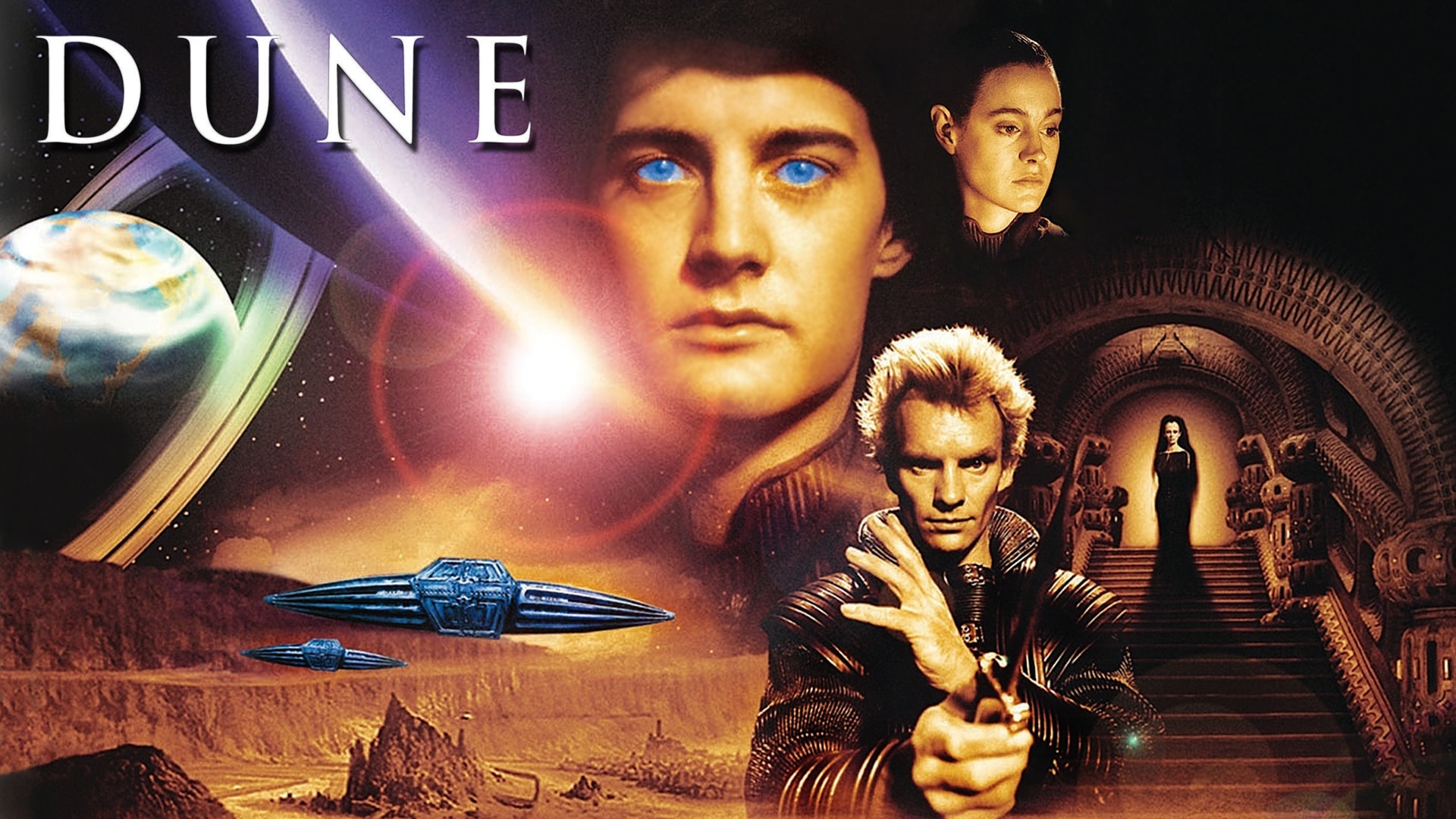
I finally saw Dune. Finally. Some might ask how I could have put it off this long, being such a big David Lynch fan. Others might say, "Oh... isn't that supposed to not be so good?"
It was something. But more on that in the conclusion.
My personal excuses for not watching were:
1. Indeed never hearing anyone say it was good.
2. Being a cheapo who doesn't like to pay (upfront) for movies anymore. (Dune is not on Netflix or Hulu Plus).
3. A fear of watching David Lynch do an adaptation instead of an original story, because it might be void of soul and a waste of time.
For some mislead reason, I felt as though Lynch's adaptations would be something he did for money; paying his dues before he could break out and make another movie like Eraserhead. However, after seeing The Elephant Man - based on a book of the same title - it was clear that it was possible for Lynch to make an adaptation all his own.
I decided to give Dune a try after seeing the YouTube video Lost In Adaptation: Dune. I'm a jerk to myself when it comes to spoilers, so having not read the novel by Frank Herbert, nor seen the movie, my interest was piqued. The video was created by The Dom, who has a series called Lost In Adaptation, in which he reviews movies compared to their paper counterparts. This series has the perfect balance of comedy and insightful analysis. I enjoyed watching several of them, including The Shining - which I adore as a film, and may actually read thanks to The Dom.
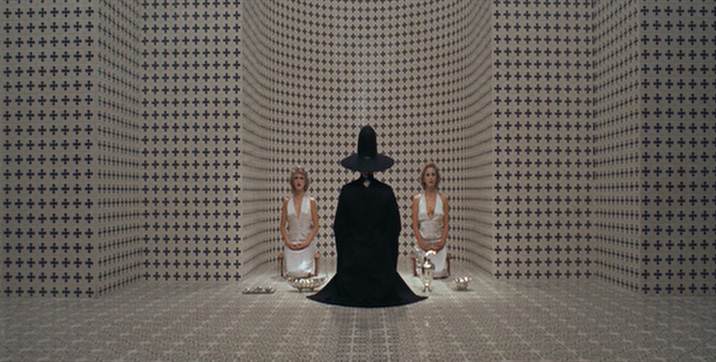
The Dom joked about how the below shots were not only inaccurate to the book, but also completely f#%ked.
Seems legit
Meanwhile, I was thinking: Dune where have you been all my life?! This kind of imagery convinced me David Lynch actually directed Dune. Maybe it wasn't neutered after all. Prepared to see the film, I went in knowing that this was not the most loyal adaptation of the book. That only made me more excited to see how Lynchian Dune truly was.
Since Dune was book-ended by The Elephant Man and Blue Velvet, I couldn't help but find ways that Dune showed signs of Lynch warming up to make Blue Velvet. Maybe Dune wasn't a success. Maybe Lynch lacked control, and didn't appeal to audiences within the scifi genre. Blue Velvet would be his first original film in nine years, and this time around he would get it right.
Dune and Blue Velvet are not similar films in a general sense. One is a scifi epic, the other is a modern noir mystery. However, there were observable Lynch parallels on the surface that I would like to share.
Lynch's portrayal of Dune's Baron Vladimir Harkonnen as a screaming, intense, and vile character are revealed once more in Blue Velvet's Frank Booth (Dennis Hopper). Both show extreme mood swings, expressing anger and joy in terrifying ways.
Pictured: That emotion where you scream, spit, laugh and punch at the same time.
They both "blow-off steam" in nightmarish style. While the Baron will melt in ecstasy watching a young man die by heart-plug removal, Frank Booth is a rapist who huffs nitrous, cries, and shoves fabric in his mouth.
It's
believed that Lynch's Baron was way over-the-top compared
to the novel's Baron, who was more cold and calculating. Considering there was obvious citicism over Lynch's interpretation, it's possible that this character was invented by Lynch, who wanted to use Dune as a vehicle for that creative concept. Lynch says of his time making Dune,
"I started selling out on Dune. Looking back, it's no one's fault
but my own. I probably shouldn't have done that picture, but I saw tons
and tons of possibilities for things I loved, and this was the structure
to do them in. There was so much room to create a world. But I got
strong indications from Raffaella and Dino De Laurentiis of what kind of
film they expected, and I knew I didn't have final cut."
This version of the Baron may not have been popular with Dune fans, but Blue Velvet's noir backdrop would be perfect for such a jarringly evil villain.
The company the villains keep is familiar from one film to the next. Once again Jack Nance, Dean Stockwell, and Brad Dourif are on the bad guy's side.
MacLachlan's performance as Paul Atreides was a bit stoic, of not rigid. There's a level of innocence he brings to this role that doesn't work for a young man who develops into a warrior. Really all the whispered inner thoughts couldn't portray the character development that actually happened for Paul in the novel (which I have to admit I can only say in reference to reviews I read, as I have yet to read Dune). However, that innocence works for foolhardy Jeffery Beaumont, who dives into a murder mystery and nearly cracks under the pressure.
The sexy factor also works better for MacLachlan in Blue Velvet over Dune.
Because this works
and this really really doesn't for some reason.
NOPE!NOPE!NOPE!
This so disturbing to me! Why is this so disturbing to me?! Is this trying to imply a future culture where covering the arms and collar bones but revealing the nipples and belly button is sexy for men? That outfit isn't even in the movie! It's a promotional photo, proving how sexy Dune is (it's not at all btw). It made me really sad to look up this photo again* so I could put it in this post, but the people need to know.
* I say "again" only because I came across it while researching, and quickly clicked away from it in shame. Unfortunately I knew I had to share it with others - like a gypsy curse that needs to be broken.
Aside from casting, there are stylistic tidbits I observed:
A scene in Dune in which a pilot is killed, and his dead body is still sitting up wavering a bit in the seat, reminded me of a similar scene in Blue Velvet when the Yellow Man is inexplicably standing dead(ish) with a bullet in his head. In Dune it was a creepy choice to keep the dead pilot in his seat. Most action scenes in movies would have a pilot quickly killed and on the floor; with the attention on the killer taking over the controls. Keeping the pilot in his seat is disturbing, and brings attention to the violence of the scene, which is what the corresponding scene in Blue Velvet achieved.
This wasn't just a pin being knocked down, this was a man. It shows that death is not so final; the body will still be there. Unfortunately I couldn't find a photo, gif or clip of that scene in Dune, so you'll have to trust that it looked much like the .gif above from Blue Velvet.
There was also fire, and visions/dreams, and dreams with fire.
Still from a hallucination.
Fire is a common thread in Lynch's films. Dune was not immune to that. Though, I thought his depictions of Paul's visions were a little like a commercial for water purifiers.
See, that's not even scary or cryptic.
Best shot in Dune. Bad ass little girl.
Dune was obviously a project that didn't go the way David Lynch or the fans wanted. It started out as something Lynch was excited to make, but in the end it was cut up by producers and ultimately not what he intended. Unfortunately he is not going to re-cut the film - ever.
This incarnation of the film did not get me excited to learn about the Dune universe. It was difficult to follow, plain and simple. I spent most of my time trying to enjoy whatever I recognized as Lynchian. It was more like playing bingo. Ultimately The Elephant Man was a better adaptation in using his archetypes while also telling a coherent story.
My next endeavor will be to watch the documentary Jodorowsky's Dune. I thought Alejandro Jodorowsky's The Holy Mountainwas insane in a very good way, and visually outstanding. The idea that he was also a contender for making Dune is really exciting. Though he wasn't the one who ended up making it, the story behind his concepts must be wild.
When watching a David Lynch film one often has to let go and accept the
strangeness that will unfold. Why was there a creepy elderly woman and
young boy popping up from time to time in the Twin Peaks universe? In the series they appear one time. The grandmother and grandson are identified as the Tremonds. They live next door to Harold Smith - a man who Laura Palmer shared dark secrets with. The Tremonds advised Donna Hayward to speak with him, and then mysteriously disappeared as if they were a hallucination.
In Fire Walk With Me, the so called Tremonds are seen again in the Black Lodge. Now it is certain that these characters are agents or prisoners of BOB, The Man From Another Place, and other beings of the Black Lodge. The pair are other-worldly spirits.
Maybe I originally assumed that the Grandmother and child were a Lynchian archetype from his short film The Grandmother. Both young boys wear suits, which represent adult burdens on children. The suit could also imply death in that a young boy would wear such a formal outfit at a funeral or in a casket.
Still from The Grandmother.
A video I saw by selphiealmasy8 opened my eyes to another possibility in the role of the "Tremonds". They are Leland Palmer's childhood self and his grandmother.
Leland Palmer explains in Episode 2.10 that he knew BOB as a neighbor at his grandfather's lake house, though he referred him as Mr. Robertson. Leland is one of the few characters who speaks of himself as a child. Benjamin and Jerry Horne discuss their childhood, but their likenesses are seen in a flashback, we never actually see photo or flashback of Leland; all the more likely we can identify Leland as the child. Sometimes it's what isn't said, or isn't shown that reveals the truth.
"He used to shoot matches at me. He'd
say, 'Do you want to play with fire, little boy?'"
The video explains the fact that Leland only mentions his grandfather, and does not mention a grandmother or says, "my grandparent's lake house," which proves that his grandmother was dead at the time. It also points
out that Lynch has a history of conveying a familial relationship through omitting
and replacing certain pronouns in FWWM: "My mother's sister's girl."
Lynch may be sending a message by not mentioning the grandmother,
implying that she is gone, though she had to have existed.
I don't completely agree with the video's explanation that the boy represents a side of Leland that is aware of BOB's possession of him, and the Grandmother represents death to Leland. It doesn't completely explain how they exist. I just can't believe that these two beings inhabit the Black Lodge because Leland is somehow conjuring them up.
The grandmother was likely a victim of BOB as well. It's quite
probable that she lived at the lake house with the grandfather and
Leland at one point, and was aware of BOB. Maybe BOB has been collecting
members of this family for years. If she is Leland's
grandmother, she could have become part of the Black Lodge as a
wondering spirit protecting the soul of her grandson. She could have also died a more natural death, and her spirit works to protect Leland's childhood soul in the beyond.
It is clear that the last names given to the Grandmother and Grandson characters are that of the homes they invade, and not an undisclosed family name of the Palmer's. We learn that the Tremond household Donna visits in Episode 2.2 of Twin Peaks is owned by a Mrs. Tremond. However, she is not the same woman when Donna goes back to show Agent Cooper.
Fake Tremond
Real Tremond
The name of the grandson is left ambiguous. I was pretty sure of this until I read the Twin Peaks Wiki entry that refers to him as Pierre. Then I began to question myself. How do we know that this boy is named Pierre? We don't. He isn't.
If he looks like a mini David Lynch that's because he's played by Austin Jack Lynch in the series.
Pierre's card has some pretty bogus facts on it. A commenter named geoffr11 warns in The Black Lodge Encyclopedia, of an article about The Jumping Man, that the Star Pics cards were not cannon to the Twin Peaks universe. It's clear the people who made this card didn't really get what The Little Boy was, and chose to portray him as a real boy who they imagined went to Twin Peaks Elementary and likes magic tricks. It states he was born in 1983, but I think we can all agree he is immortal. And they named himPierre - out of their butts. So now that we know for sure that the Grandson's name is unknown, his identity as Leland's childhood soul is still viable.
Maybe Little Boy was affectionately named Pierre because in Episode 2.9 he said a phrase in French, which translates to “I am a lonely soul”. Oooh Frenchy knows French, what's this kid's name - Pierre? “I am a lonely soul" is the same message that would later be found written on Harold Smith's suicide note. This shows that the Grandmother and Grandson know facts about the deaths they hover around. It can also imply that they reside in a space (the Black Lodge) that transcends time, so from their perspective everything in the future is clear. The phrase could also be self reflective of the little boy. If he is Leland's sole - the sole that Leland gave up to BOB when he was "just a little boy," - then this character would be a lost soul indeed.
As characters the Grandmother and Grandson are neutral in almost every way. The Twin Peaks Wiki states that Mrs. Tremond/Chalfont "has an unclear link to the Lodges
and her intentions are unclear." They have interactions with people, but are not antagonizing. One might
argue that if the Grandmother is Laura Palmer's great
grandmother, wouldn't she be a bit more loving in her presence, or try harder to keep
Laura away from harm? Instead she and her grandson treat Laura as a
stranger they have to relay cryptic messages to. I don't have a concrete answer to this, but it could be that since the Grandmother was not alive when Laura was born, she has no emotional attachment to her as a spirit. The little boy wouldn't know Laura as his daughter either, since he embodies only that of Leland's past self. While they seem to be wherever death is, it may be that the Tremonds prepare BOB's victims for the inevitable.
Nothing they do explicitly helps anyone, or harms anyone directly. When Laura sees the couple outside the diner in FWWM, the Grandmother hands Laura a framed picture of a room. The picture later leads Laura through a dream that makes her aware of the green ring and the Black Lodge. The Grandson whispers about BOB/Leland taking Laura's diary:
"The man behind the mask is looking for the book with the pages torn out. He is going towards the hiding place."
He doesn't use any names, and doesn't imply any urgency. The Grandson just makes the statement, and Laura takes it as she will. Laura is disturbed by this knowledge and it causes her to go home and see that the "man behind the mask" is BOB, and Leland is his mask. The Tremond's information is informative, but Laura still is set on a path towards destruction.
The mask warn by the Grandson in this scene represents Leland's ignorance to his own possession. It also acts as a disguise from Leland himself and Laura. In the Black Lodge Encyclopedia of The Twin peaks Gazette user Sourdust says of the mask, "Significantly then, his true face is never seen by any of the Palmers, who would otherwise be able to identify him."
The Grandson is unmasked in front of Donna, but she wouldn't recognize him as Leland anyway. In the other scenes where he appears outside the Black Lodge in FWWM, the boy is masked in front of Laura, who would recognize him from photos and just generally being familiar with her own father. When Leland is walking away from the motel where Laura is waiting with Teresa and Ronnette for their John (well, Leland actually), he catches a glimpse of the Grandson jumping in the parking lot. Leland may have recognized himself if the mask weren't there.
The only other instance we see the Tremonds interacting with someone in the real world is in Twin Peaks during the scene where Donna Hayward makes her Meals on Wheels delivery. Mrs. Tremond emphatically says that she does not like creamed corn. We learn in FWWM that creamed corn is the physical embodiment of "garmonbozia" which means pain and sorrow. The Man From Another Place and BOB horde garmonbozia, so if anyone says they don't like it, then they must be one of the good guys.
The Grandmother and Grandson's only suspicion comes from being close to death and destruction. In FWWM we don't actually see them at the Fat Trout Trailer Park where Teresa Banks lived. This is the only time they are referred to as the Chalfonts. The land lord of the trailer park tells Agent Cooper that the empty space used to have a trailer in it owned by the Chalfonts, who were an old woman and her grandson.
This explains their other last name. They could have simply possessed the Chalfont residence for a time, as they did with Mrs. Tremond's home. However in this case, the real Chalfonts never return once the Grandma and Grandson disappear. The trailer is gone and the landlord doesn't know where they went. It can only be assumed that this is the same grandmother/grandson pair that we know of, and they split town once Teresa was done for - or after Agent Chester Desmond picks up the green ring under their trailer and inexplicably disappears himself.
Somehow Lynch can always make empty lit rooms seem sinister.