Tuesday, August 13, 2013

I've Been A Bad, Bad Girl


Fiona Apple's Criminal vs. Miley Cyrus's We Can't Stop

When I saw Miley Cyrus's video for We Can't Stop, I had a case of Deja Vu. There was another epic house party with tons of bodies, pool time, and randomness from 16 years ago. It's a party that has not gone out of style, and I have Fiona Apple's 1997 video for Criminal as evidence.

Criminal is one of those life-changing videos I saw when I was 10 years old. Maybe it chipped away at my innocence a bit, but musically Fiona Apple would become one of my favorite artists. Apple was 20 when this video debuted, as is Cyrus. Watching We Can't Stop, and knowing Miley Cyrus's fan base of tweens, makes me wonder if there's a group of 10 year-old girls watching it and having the same feelings I had over the Criminal video; curiosity over how unsafe everything is, what it's like to be a "grownup." Realizing it's kind of cool to be dangerous. Thinking maybe some day I'll get to be strung out in someones nice house.  

Apple's and Cyrus's respective videos both take place at a wild house party that maybe got a little out of hand. Apple's take is a bit more sinister. She's writhing around, awake when everyone else is asleep, as if wrestling with guilt. The opening line of the song is I've been a bad, bad girl. Other lyrics include Heaven help me for the way I am and I've done wrong and I want to / Suffer for my sins.

The point of Cyrus's song is that the party got out of control and therefore everything went as planned. The song has lyrics such as, We run things, Things don’t run we and It’s our party we can do what we want. It's unapologetic.

Apple's video was directed by Mark Romanek who also directed Closer by Nine Inch Nails, which can explain why it aint no party like a Romanek party cuz a Romanek party has at least a little bit of dread in it.

We Can't Stop  was directed by Diane Martel who has a huge resume including directing credits for - unsurprisingly - Robin Thicke's Blurred Lines, which has a similar usage of taxidermy, stationary bikes, butt-touching, large captions, platform shoes, and product placement.

Despite differing messages in the song lyrics, here are some visual similarities that seem to be the archetypes of a wild music video party.

Let's start with holding the camera on these electrical appliances.

Lay on the floor. Watch your head when you get up, though.

Stretch out your clothes.

Sing just above the water.


Have fun in the pool. ...Or don't, Fiona.

Stuffed animals.

Get freaky in the kitchen.


Hang with your friends. (The 97' version had more photo-taking and less twerking.)


Snuggle up to a shirtless guy with no identity.

It's so tired in here!


Do inexplicable things with food.

Put your fingers in your mouth.

Get creepy.

Misuse the furniture.


Have fun in the bath tub.

Bend your legs, show off our thighs.

Pink goo.


Essentially the same things happen in both videos, but the color pallet and song lyrics change the meaning quite a bit. Both say, "Look at these people carelessly sleeping all over each other." With that visual, Criminal implies the decline of western civilization. Everyone is kind of in a stupor they will probably regret. We Can't Stop tries to depict a group of young people who do weird and provocative things with each other, and yeah, they're probably high on something, but there's a charm to it. Everyone seems to be having fun. Everyone in criminal seems kind of indifferent.

Here are the full videos for your enjoyment.


Saturday, August 3, 2013

To Build and Walk Away:The Pruitt-Igoe Myth


Pruitt-Igoe contained an amount of negative space that once witnessed and understood evoked feelings of dread. I didn't know I was looking at the Pruitt-Igoe apartment complex when first watching the segment in Koyaanisqatsi in which a series of unkempt apartment complexes are shown in sweeping areal shots. I had seen large apartment buildings before, nothing seemed awry. When the shots come in closer, and it was apparent that the buildings were lifeless empty shells, the horror becomes clear. Every window was broken, like there was an effort put into Pruitt-Igoe's special appearance: just enough damage to convey everything bad in this world, while still being able to stand. How could this have happened? It was like a carcass lying in the open. 

Before it was demolished in the 1970s, Pruitt-Igoe was supposed to be a turning point in the socioeconomic heath of St. Louis, MO. A modern public housing project conceived during the 1950s that would provide low-income families with apartments that were dream homes compared to the slums they were familiar with. It consisted of 33 11-story apartment buildings, which was one of the largest complexes in the USA at the time. It was advertised as a utopia, or more realistically, a clean civilized place that would promote idealist white civilized behavior, or even more realistically, a place to segregate the poor black population; a band-aid.

The St. Louis government paid for the construction, but failed to pay for the upkeep of a massive ecosystem they didn't understand. The documentary The Pruitt-Igoe Myth, directed by Chad Freidrichs, investigates the factors that lead to the devastation; a problem even larger than the original slums they were trying to eradicate.

The Pruitt-Igoe Myth uses heartbreaking footage of the apartments as well as interviews with former tenants. It is shocking how disparate their memories of Pruitt Igoe are; from the joys of their first Christmas out of the slums, to family members brutally murdered in the playground. The intentions of the St. Louis housing authority begin to get hazy as the film goes on. Some who are interviewed described the complex as a prison. Living in Pruitt-Igoe was supposed to be an opportunity, but it came with a price. There were regulations that prohibited "able-bodied husbands" from living there, effectively breaking up families so wives and their children could qualify to live there. Telephones and televisions were prohibited also. All of this lead to overwhelming feelings of isolation. And while young children were taught to fear the white men in suits who regularly checked homes to be sure their fathers were appropriately absent, there was a total lack of regulation in keeping the buildings safe from criminals, fire, and filth. It was doomed from the start to keep everything good out and drag complete negativity in, until it literally had to be imploded.

Wednesday, July 17, 2013

Toynbee Tiles and the Drive to Understand an Insane Thought Process

In case you don't know, the so called "Toynbee Tiles" are the epitome of underground gorilla propaganda.

First and most prominently found in Philadelphia - but also found in cities across the north east/west, and in South America - the Toynbee Tiles are messages adhered to the pavement. Starting in the early 1980s, the same message was seen repeatedly throughout Philly, "Toynbee Idea, In Kubrick's 2001, Resurrect Dead, On Planet Jupiter." Sometimes they would be accompanied by side notes that said things like,  'Murder every journalist I beg you.', 'That's when I begged them not to destroy it. Thank you and goodbye.' and 'I am only one man.' Absolutely the ramblings of a sad and paranoid individual. But no one could figure out who this person was, or even how they could manage to put these tiles on busy streets and highways all over the country and abroad without a trace.

The 2011 documentary by Jon Foy, Resurrect Dead: The Mystery of the Toynbee Tiles, follows a man's obsession with finding the meaning, origin, and maker of the Toynbee Tiles. Justin Duerr , the protagonist, says, "'Toynbee Idea' was the first thing I put into an Internet search." Obsessed with the tiles since 1994, Duerr and a group of like-minded friends set out to find the Toynbee Tiler and understand his message. Where Duerr and his friends take you is unexpected. In the course of the film they cover underground societies, railroad routs, shortwave radio, and the lore of Philly locals. 

Justin Duerr over a Toynbee Tile

What can be surmised from the main four lines spotted over 100 times throughout Philly, can be broken down as such:
Toynbee Idea - Reference to Arnold J. Toynbee, a British historian who believed that the molecules of the dead could be put back together to resurrect all previous human life.
In Kubrick's 2001 - Stanley Kubrick's film, 2001: A Space Odyssey, which shows themes of cyclical life and death.
Resurrect The Dead - See Toynbee Idea above.
On Planet Jupiter - A monolith is found on Jupiter in 2001: A Space Odyssey which is the only obvious tie between Jupiter and the rest of the lines. 

The tiler appears to believe that the movie 2001 takes Toynbee's idea further by showing how we can execute this theory on Jupiter. But how did this person come to that conclusion, why is it so important that the message gets across, and why do they have to be incognito? 

After learning about the tiles, the viewer needs answers. That's what makes Resurrect Dead amazing to watch: the palpable excitement of the chase. The documentary succeeds in making Duerr's enthusiasm contagious. Anyone can relate to the concept of seeing something strange that maybe most people overlook. It's the idea that someone out there is trying to send a message, and in their bizarre manner of doing so, it feels like it's just for you (since everyone in the street is just walking over it like it's not there, instead of making a massive crowd around it. No, it is just you standing there taking photos and getting in the way of commuters).

This story is reminiscent of my own case of unexplained phenomena. Over the past two years of living near a particular CVS in Allston, MA, I have noticed odd piles of ground up food next to an electrical box. The box is right outside the CVS and is not particularly close to any restaurants - not close enough to make this spot an obvious dumping ground. Every once in a while (I have not found a pattern yet) the food will be there at night. The offerings are either cooked rice, ground-up white bread, or a mix of the two. The piles are sometimes so big they lean against the electrical box as if it poured out of the vents. The next day it is completely gone, leaving a perpetual dark grease spot.

A massive offering that has been spread about.
A smaller, grosser looking pile.

I have never seen it being put there, or seen what eats it up/takes it away. My guess is that pigeons eat it, based on one time I found red beans scattered about as if rice and beans were put there but the birds could only consume the rice. And all the bird poop. But who is the person offering up this food like a sacrifice to an electrical box god?
Only red beans left...
Much like Duerr's Toynbee Tile investigation, I want to know what this person's intentions are. When the message is that cryptic, being able to solve it means to understand another person's thought process. A connection is made. The non sequitur becomes a sensible part of life.

 Resurrect Dead: The Mystery of the Toynbee Tiles is available on Netflix.

Friday, May 17, 2013

Room 237: When the Director Haunts the Audience


After watching Room 237, my perception of ghosts has changed.

Room 237 is a documentary in which theorists and experts of Stanley Kubrick's The Shining share their findings concerning hidden messages in the mise en scene of the film. The Shining is already terrifying on the first watch. It is undeniably tense, and creepy, and gory. In the next watching of The Shining one might notice more creepy details; a notable turn of phrase, color themes, a missing piece of furniture.

The folks from this documentary studied The Shining meticulously. Their continuity errors and coincidences turned into theories about hidden messages from Kubrick. The messages and symbolism he hid in the film are like ghosts in and of themselves.

Repeated Native American imagery hints that they were the ghosts haunting the Overlook Hotel. "We built it on an Indian burial ground." Where have I heard that before?

A movie about a haunting is scary on the first viewing because of the surprise elements, but if there is something new to notice in the next viewing that can rekindle the same fear. It causes one to question what is perceivable. What am I missing? What demon was right behind me and I didn't notice?

This is what you get when The Shining is played backwards and forwards at the same time.

Kubrick's added touches (whether he meant them or not - but he probably did) make the avid viewer witness to a real haunting. It is a haunting of the audience by the director. The director is communicating with the audience as a ghost would to it's haunted; without words. He does it with continuity errors in the furniture, things out of place, subtle hints in the shapes of props, the colors characters wear.

Kubrick 1. was very secretive, 2. detail-oriented to say the least and 3. is dead, making these hints literal messages from beyond the grave.

Someone thought the hotel manager got a ghost boner when he shook Jack's hand. While it is undeniable, I'm not sure why it's important.

I know I'm not alone in saying that documentaries such as Room 237 are thrilling. Once you thought you saw The Shinning too many times to be scared, the people in these interviews inject more "ghosts" into it. The most interesting part is that we all know it's just a movie; the ghosts haunting the Overlook Hotel are fictional. Kubrick's hidden messages are not actually scary ghosts, yet hearing about his sly trickery, his subliminal mind teasers, will give you chills. This is because people like to be in control. That's why ghosts - if they exist - are scary; you never know when they will strike, how they will show themselves, and to what severity it will effect you. A powerful and genius director such as Kubrick has power over his cast, set, and audience, with the way he chooses to withhold and dispense information. We continue to find the specters of his cinematic message to this day.

Still, no one in the documentary explained this...

Monday, April 22, 2013

My Twin Peaks Infographic: Sneak Peak


Do you ever get so excited about something that you want to present it to the general public in excessive detail regardless of popular interest? I guess that's what geeking-out is.

Let me preface my confessed geek-out by saying, David Lynch is somewhat of a hero to me, and I attribute Twin Peaks to the creative awakening of my teen years and beyond. Seeing Twin Peaks opened my eyes to a world where scary, creepy, awkward, and ominous were valued attributes of legitimate art.

Over the course of 3 days and a bad cold, I re-watched all 30 episodes of Twin Peaks on Netflix. I hadn't watched them in about 10 years, since I originally spent my winter break of 9th grade viewing every episode of the VHS box set I got for Christmas.

A fun side effect of the time in between viewings was recognizing actors I never realized were in Twin Peaks. It was the knowledge of ten extra years of movies and TV added to my internal IMDB. There were some connections between actors I already knew about, like how Russ Tamblyn (Dr. Jacoby) and Richard Beymer (Ben Horne) were both in 1961s West Side Story, or how Billy Zane and Heather Graham may be two of the most famous actors to come out of Twin Peaks, or how Jack Nance (Pete Martell) has a role in pretty much in every Lynch movie. But there were some connections that kind of blew my mind.

Like how the actor who played Luther from The Warriors (David Patrick Kelly) was also 90's shirt wearing icon, Jerry Horne. 
Is that shirt real?

Revisiting Twin Peaks - this time with a fine toothed comb - I became inspired to do some research. I scoured IMDB and Google Images to try and find what the major cast did before and after the show. Since Twin Peaks went off the air in 1991, the cast has gone their separate ways, but not without running into each other from time to time. I love the before and after images; seeing how an actor ages and how versatile their roles have been.

Being an obsessive organizer, my interest in the comparisons and connections inspired me to make an infographic. I wanted to make something that would map out all the connections I thought were fun and informative.

It's still a work in progress, but below is a sneak peak at the format. 

One fragment of my Twin Peaks infographic.
I color coded the character photos from TV shows and movies that had three or more actor connections. Notice in the key below that Star Trek and X Files are shows of note. The scifi genre is common in this group. I also wanted the color scheme to be relevant to Twin Peaks. The icon of an owl and the garish neon green from the Twin Peaks font represents Twin Peaks itself.  The others in the map key are cherry pie red for other David Lynch projects, black coffee (dark brown) for Star Trek, Laura Palmer's blue dead lips for X Files, and Laura Palmer's golden broken heart necklace for miscellaneous pair ups.


There were a majority of actors who paired off on various projects, or happened to be on the same show but at different periods of time. I labeled all instances of two actors in a show or movie under gold, for the aforementioned heart necklace. This is in reference to a plot point in season one where finding the other half of the necklace was imperative, thus 'Find the Other Half'. Part of this choice was made because there were too many TV shows and movies and not enough contrasting color combos to make a coherent chart identifying all of them individually. Also giving the viewer a challenge makes the infographic more interactive. Since all the pairs are identified under the one color, it causes the viewer to search for the commonalities on their own.

Another fragment
Basically I'm saying, "Let me IMDB that for you." so you don't have to get into an internet search k-hole, where you realize it's 2am, you have 20 tabs open in Firefox and you're watching the trailer from The Boyfriend School.

Let me do that.

When the project is completely done, I will post it here and anywhere that will take it.


Friday, March 22, 2013

Oranges: More Than What You Need To Know

I was going to write an article praising Minneola oranges (my fave) and bashing Navel oranges (let's be honest: hit or miss, right?). After eating and photographing the fruit that was going to prove my point, I realized they were both delicious and bizarre.

Come inside!
Here are the photographs I took on my citrus journey, and some eye-opening facts about oranges.

  Eat a Navel Orange and take your mouth on a time machine ride

... with a clone who has a conjoined twin inside it. 

Kill...me...
Navel oranges have a mutation that causes them to develop a conjoined twin fruit at it's base. This mutation also leaves it seedless and sterile, making cutting and grafting the only means of cultivation. 

In 1873 three navel orange trees were brought from Brazil and planted in Riverside, California. The trees started producing fruit in 1878. Today, one of the three original trees is still alive and producing fruit.


Since grafting branches onto other living trees does not allow for selective breeding, all navel oranges can be considered fruits from that single nearly 150 year-old tree. They have exactly the same genetic make-up as the original tree and are, therefore, clones.

Names, names, the magical fruit...

Not the most impressive nip I've ever seen
The knob on a Minneola is called a nipple.

The Minneola tangelo is a cross between a Duncan grapefruit and a Dancy tangerine. Fancy pants.

Minneola, Florida sounds really boring and depressing. They appear to have a high unemployment rate, are considering building a horse racing track to create jobs, and are not currently growing their namesake fruit. 


The name Tangelo comes from the Honeybell variety of tangelo, which is a hybrid-cross between a Thompson tangerine and a pomelo. Also, pomelos, where have you been all my life?

What came first, the fruit or the color? Believe it or not, oranges are not named for their color. The word "orange" comes from a transliteration of the sanskrit "naranga" which comes from the Tamil "naru" which means "fragrant."
 
Before the late 15th century, the color orange existed in Europe, but without the name; it was simply called yellow-red. Spanish and Portuguese merchants brought the first orange trees to Europe from Asia in the late 15th and early 16th century.

In parts of Germany, the Netherlands, and Russia, the orange was called and is still called the "Chinese apple."

It's like apples and Chinese apples? 

Oranges and your body


 Use a straw while drinking orange juice, because the acids in the juice can cause the enamel of the tooth to erode. Therefore, the less contact juice makes with the teeth, the better.

You will have to eat 7 cups of cornflakes to get the same amount to fiber you would get from one medium orange. 

You can get gout from drinking OJ:

Fructose-rich beverages such as sugar-sweetened soda and orange juice can increase serum uric acid levels and, thus, the risk of gout. In a study, compared with consumption of less than 1 serving per month of sugar-sweetened soda, the multivariate relative risk of gout for 1 serving per day was 1.74 and for 2 or more servings per day was 2.39. The corresponding relative risks for orange juice were 1.41 and 2.42. Thus, the side effect of drinking orange juice is gout.
source - www.zhion.com 
 

In conclusion: 

 135 year-old clones, conjoined twins, nipples, depressing Florida towns, pomelos, everything you know about colors is wrong, Chinese apple just doesn't have the same ring to it, sad teeth, happy colon, gout.

Tuesday, March 5, 2013

HBO Makes a Good Choice in VICE

Two of my favorite sources for documentaries and entertainment are coming together!

On April 5th, HBO premiers it's newest series, VICE. Yes, that is VICE magazine, the website that has been pumping out daring docs about war, third world countries, pollution, drugs, sex and other controversial topics. Vice is not afraid to show something strange, or gross, or perverted, or depressing, or just plain real. As correspondent Ryan Duffy explains, they are attempting to tell untold stories.

Like I've said about VICE documentaries before, "The documentaries are presented in a relatable and vernacular style, which does not necessarily over-simplify the message; it makes you feel like you're taking in a genuine experience."

HBO is an excellent venue for VICE, in the way that HBO is unafraid to present controversial programing, and I am happy for VICE for getting recognition from a major cable network.


Wednesday, February 27, 2013

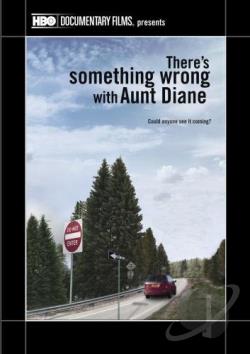
There's Something Wrong With Aunt Diane: A Crime With and Without Conclusions


Some might say that this investigation and documentary are a waste. They might say there is no point in searching for answers when the evidence is so clear. In the eyes of the Schuler family, this evidence was a complete lie.

Directed by Liz Garbus, There's Something Wrong with Aunt Diane, follows the life of Diane Schuler, and her family's hardship in further investigating her involvement in the Taconic State Parkway crash of 2009.

Diane Schuler was placed with the responsibility of driving all the children home from a family camping trip in upstate NY.  It was something she was no stranger to. Diane was a dedicated mother and homemaker. She was beloved by everyone she knew. In a completely unexpected turn of events, Diane's mini van was seen traveling down the wrong side of the Taconic State Parkway. After 1.7 miles, a head-on collision ended the journey, killing Schumer, her 3 nieces,
her 2 year-old daughter, and 3 men in the other vehicle. The only survivor of the crash was her then 5 year-old son, who could only attest that his mother had trouble seeing and didn't feel well.


The Schuler family mini van after the crash in 2009
Finding high levels of alcohol and marijuana in Diane's system, her family is still in disbelief that the Diane they knew could endanger so many lives. It is a truly heartbreaking story. Diane Schuler's husband and sister-in-law continue to fight for her reputation. It is hard not to feel sympathy for Diane, with the information later given to us. The film begins with the press conference footage of her tearful husband insisting that the toxicology reports must be wrong.

This is a case filled with controversy. The victim's families are frustrated. They feel that the Schuler's insistence on clearing Diane's name as a closet drunk is a slap in the face for the victim's justice. How can you dispute the hard evidence? Could there have been a mix-up in the lab? Could there be some kind of medical issue to cause such results that we are unaware of?

Video surveillance from the gas station Diane stopped in soon before the crash appearing sober, but asking for pain relievers
Paced very well, There's Something Wrong, covers Schuler's history, interviews old friends, as well as witnesses of the accident, interspersed with a linear timeline of the incident from when she left the camp site, to the crash itself. It comes together in pieces; after we learn a new facet of Schuler's life, we get sucked back to the infamous day, seeing her inch closer to the incident. By the time you get to the moment of impact, we know Schuler's medical history, her personal life, and her family. It makes the moment that much more intense. The end is clear as soon as the film begins, but the culminating moment is so charged with suspense and tragedy, that I could not help but cry. The events plainly stated are undoubtedly horrific, but There's Something Wrong takes you on that fateful ride till it sinks into you.
Diane and Daniel Schuler
At first the documentary appears to side with the Schulers - aside from a few interviews with the victims families and witnesses of the crash. However, Garbus does not hesitate to show the meetings and desperate phone conversations where investigators and doctors double check the damning test results, only to find once again they were accurate. Even with all the pieces laid out there is an incomplete puzzle. The Schuler's testimony on Diane's life only make it harder to complete.

Tuesday, January 22, 2013

Care Package #3: My Art, My Obsession

"Things that are personal have flaws. They have vulnerabilities. If you don't see a vulnerability in somebody, you're probably not relating with them on a personal level."
- Jonathan Blow creator of Braid 


This Care Package of documentaries was assembled and packed for all my artist friends and the people who love/endure them. Dedication can sometimes be misconstrued as selfishness, and passion as mental illness. While these artists walk this fine line, their respective documentaries show both sides of the coin.

Exit Through the Gift Shop 

Exit Through the Gift Shop, directed by Banksy in 2010, follows video artist turned overnight graffiti millionaire, Thierry Guetta. Obsessed with capturing every moment of his life, Thierry's hand was glued to his camcorder. In the early 2000s Thierry visited family in France, a cousin going by the name Invader, would soon become a popular graffiti artist in Paris, famous for his space invader mosaics. From the moment he began filming Invader's process, Thierry became obsessed with filming graffiti artists, and went home to LA to follow Shepard Fairey, and Banksy. He logged so many hours of video, he would surely have made a documentary about Banksy and the whole movement. Unfortunately Thierry was incapable of organizing his thoughts, let alone his unfathomable amount of tapes. That's when Banksy took the reigns and documented Thierry.

Exit Through the Gift Shop, documents Thierry's journey from graffiti super fan, to carbon copy graffiti star. Thierry studied these artists with a microscope, and absorbed every detail, to the point where his own art could be judged as hacky. In a matter of months Thierry, going by the monaker Mr. Brainwash, put on a huge warehouse art show a la Banksy's Barely Legal, called Life Is Beautiful. He found a formula for success that took the other graffiti artists decades to accomplish. But is that impressive? Banksy noted in the film, "He's kind of the rightful air to Andy Warhol... Andy Warhol made a statement by repeating famous icons till they became meaningless, but he was extremely iconic in the way that he did it. And Thierry really made them meaningless." 

Pie In The Sky: The Brigid Berlin Story

Speaking of Andy Warhol; his socialite muse, Brigid Berlin, who is often over-looked as a key figure in Warhol's success, embodies obsessive consumption and production. Pie In The Sky: The Brigid Berlin Story, directed by Shelly Dunn Fremont and Vincent Fremont in 2001, utilizes old movie footage from the Berlin home, Warhol's films, testimonials from aging Factory regulars, and riveting interviews with Brigid as she is today (over 10 years ago at this point).

Brigid's addictive and obsessive personality takes on many forms. The list runs the gamut from over-eating (she describes herself as a bottomless pit) which must be curbed by strict meal portioning and scheduling, obsessive cleaning and organizing; her drug use in the 60s and 70s; audio taping every phone conversation; taking hundreds of Polaroids; and obsessive journal keeping. The best journal/sketchbook being the "Cock Book" in which many famous artists and actors drew penises in a thick blank bible Brigid was hell-bent on filling to completion. It doesn't matter if she's eating 50 key lime pies, or weighing her lettuce; Brigid must live with extremes.


Pie in the Sky paints a portrait of Brigid by piecing together the portrait she made of herself.  From the start of her time in Andy Warhol's factory, Brigid has been creating a never-ending autobiography. Her childhood traumas and frustrations, can be heard in the taped telephone recordings of her socialite mother. Brigid would do one woman shows where she would telephone her mother onstage to the audience's delight, and her mother's embarrassment. The best parts of this film are when Brigid impersonates her mother; doing an improvised (or most likely memorized) monologue of Honey Berlin, who berated Brigid about her lifestyle choices.
Brigid's art is the definition of raw vulnerability. She has a drive to show the whole world her naked self, whether figuratively or literally. 

Indie Game: The Movie

Directed by Lisanne Pajot and James Swirsky in 2012, Indie Game: The Movie may seem like a curve ball in this list, but it's themes define the set. Even the quote at the top of the page is from this documentary. In Indie Game we meet the creators of Super Meat Boy, Edmund McMillens and Tommy Refenes; Fez, Phil Fish; and Braid, Jonathan Blow. Though the games they create are very unique to each other, they share a similar story of passion, masterful creation, and unbelievable stress.

What defines an "indie" video game is summed up in the personal vision. These are programmers who abhor the idea of working for a major company. They would much rather release their own concepts, even if that means working with a team of two programmers and enveloping your life with coding. When you don't have the same team that Nintendo has, you sacrifice your social life, and to a degree, your sanity. However, indie game designers can then base games on personal interests, beliefs, theories, and even subconscious fears without anyone to curb them.

When asked what he would do if his game, Fez, (three years in the making) failed, Fish said, "I would kill myself... That's my incentive to finish it; is that I can then not kill myself." These individuals are creating what they consider to be an ultimate art. Their video games are visually appealing, the story lines are powerful, and their cleverness is inspiring. Depression is not uncommon in this world. Failed projects are of course crushing, but surprisingly, depression as a result of successful projects is also possible. As proven with Jonathan Blow, his game Braid was extremely successful and received many accolades, but the critics did not recognize the meaning behind the game Blow intended. Blow felt isolated and misunderstood, as if his work was done for naught. Putting their souls into this creates a vulnerable situation for these programmers. That makes their games subject to heavier criticism; and when the whole company is you, the setbacks are much more monumental. Undeniably the vulnerability adds something relatable and charming.


I want to celebrate artists who make their art their life and vice versa. Those of you who take your insides and throw them to the sharks, you are appreciated.

Sunday, November 18, 2012

The James Holmes Conspiracy: The Illuminati is the Answer to Every Question

Conspiracy theories can be fun or offensive, depending on how you look at them. They are either going to fall under the cheesy horror category, like Whitney Houston's death linked to satanism and the Illuminati; a harmless guilty pleasure. Or it could fall under the controversial, like the 911 conspiracy; the kind of thing you don't want to publicly admit you believe. In the case of James Holmes and his mass murder in an Aurora, CO movie theater, it was a surprise to me that anyone had a conspiracy theory on this to begin with.

Thrown together in August of 2012, Mark Howitt's The James Holmes Conspiracy, is a roughly edited, comical Power Point presentation with the ultimate goal of promoting the 2nd Amendment. I was duped into watching this because the doc was listed on a website with legitimate movies and TV shows. Howitt has a Youtube account full of documentaries he's made, and it looks like that's the venue they should remain in. Aside from hokey visuals used to drive points home, most of Howitt's footage is not even his own. It's a classic Youtube low-fi documentary. He conducts no interviews himself.  For five minute blocks at a time other footage is used, from shows like Dateline and FOX News, and I assume other documentaries which Howitt does not cite. Using news footage in a documentary is fine, but these were long unedited cuts. It appeared this was a rough draft, maybe even just the research stage, of his documentary.  Since it was made only a month after the shootings took place, it is clear there was a sense of urgency to produce it.

Logical progression...
In a nutshell, what Howitt is trying to prove about the Aurora Shootings is that the US Government and whoever controls the banks this week, wanted to accomplish three things: ruin the life of James Holmes, ruin the life of his father, Robert Holmes, and have an excuse to repeal the 2nd Amendment.

James Holmes was a "promising scientific candidate" in the field of neuroscience. The government logically wanted to snuff that candle, so they brainwashed him and endangered the lives of over one hundred people.

Robert Holmes created an algorithm that traces money back to it's source. He was scheduled to testify in the court case of the LIBOR banking scandal. In retaliation, Robert's son was brainwashed, and murdered 12 people, injured 58. As usual this was the best roundabout plan the Illuminati could come up with.

And while the Illuminati are working on their agenda, why not help the overwhelmingly liberal US government use this horrible event as a jumping point for gun law restriction?

Please take note that much of this has been said in complete sarcasm, as I do not think any of these scenarios are possible. If the government is so powerful, why didn't they just murder or brainwash Robert Holmes? Were they bored?

There are so many things wrong with this documentary in style and in coherence. It might not even be worth reviewing or complaining about. It is what it is I suppose, but still something I want to share regardless. I can only summarize all the flaws; there were just too many.  Below are my favorite screen shots from The James Holmes Conspiracy, to make my point.

Random visual within the first five minutes, great.
This part of the film was hilarious! Bill Clinton standing still for makeup. Spooky.

I hate to burst your bubble, but Illusions of time are not actually time travel. Note the use of the word "illusions."
Lead, Saturn, Time? This Google search is presented to the viewer in order to explain something, but it definitely fails at that. Except we do learn that Holmes trained at Lead Valley Range which of course means... wait, what were we talking about?


Meant to show that Holmes began to pay less attention to his studies. Doesn't give a S#%T!

Segments of The Manchurian Candidate were rampant in this documentary. I almost forgot that was a fictional movie for a second, and then I realized this entire documentary is fictional anyway, so just throw in whatever movie clips will make your point.

Was Holmes a lone wolf or was there an accomplice? Did he play Majic The Gathering? These are questions that need to be answered.

Basically played five straight minutes of the Vice documentary about the mind control drug Scopolamine, where the only visuals Vice had were wide shots of Bogota.

Let's talk about Fast and Furious for 10 whole minutes!

Howitt remarks how the Holmes story is "strangely similar to The Dark Knight Rises. " You are then forced to watch the entire preview without any further analysis. 

The James Holmes Conspiracy (2012 Full Documentary) from Multiscan on Vimeo.

Despite all this, I do recommend this documentary if only for a laugh, and the few bits of info that are actually thought-provoking. For instance, the extra gas mask found lying in the parking lot of the movie theater: who did it belong to and why was it there? Why did the chief of police skirt questions about the video survalence footage? Those were the only two things I cannot explain. Everything else about this case seems to be the result of a guy that just went off the deep end and used his college grant money to buy a bunch of weapons. I'm sure if you have a clean record and good credit history it's pretty easy to plan a mass murder. That last statement was not sarcastic.