Showing posts with label true crime documentary. Show all posts

Wednesday, May 3, 2017

Review: Casting JonBenet


The case of JonBenet Ramsey has been a life-long interest of mine. I was nine years old at the time of her death, December 25, 1996. In my memory we were the same age, but that's not true. JonBenet was six years old when she lost her life. Nine and six can feel like miles apart, but even then I knew we were just little children. No matter what age it was a terrifying prospect that not even I could be guaranteed safety.


Throughout the years the case has come in and out of the spotlight. It flared up again in 2006 when John Mark Karr falsely claimed to have sexually assaulted and murdered JonBenet, most likely to be extradited from Thailand - a country where he was facing criminal charges for other sex crimes.

John Mark Karr

Within the past year the case got new life again when CBS aired the docu-series The Case of: JonBenet Ramsey, basically pinning the crime on her older brother Burke. The response to this program was the infamous Dr. Phil interview with Burke Ramsey, denying the allegations that he killed his little sister, but managed to meet everyone's expectations of him being a bit creepy.

Burke Ramsey

Hot off the heals of The Case of... is the Netflix documentary Casting JonBenet. Anything JonBenet is going to be a must see for almost anyone. Millennials and Gen-Xers alike are hungry for answers, and in a creepy way, nostalgia. Younger viewers who had not yet been born or were just babies in 1996 (not Millennials, but I don't know what their generation is labeled yet) will be drawn in by the bizarre nature of the crime, and the current fad of true crime programming.

John and Patsy Ramsey 

Actors playing John and Patsy Ramsey 

My first impressions of Casting were that the cinematography was top notch, and the lack of a common voice as narration was creative. My preferences for documentary tend to lean toward the non-narration style; documentaries that only use audio from news clips, or that use interviews without the interviewer's voice. In this case the narration was facilitated by groups of auditioning actors, giving their impressions of the roles they were cast to play as well as reading their scripts of classic dialog from the case.


We have a group of Patsy Ramseys, the brunette southern belle, former beauty pageant winner and distraught mother. There is a group of grey-haired John Ramseys, the sometimes suspicious and also tragic father. A handful of young boys with a wide range of acting abilities are poised to represent Burke Ramsey, and some others set to play detectives, John Mark Karr, and an unnerving Santa impersonator (who looks mighty suspicious, though he did have an alibi).


Of course there is the parade of JonBenets. We have a limited view on who JonBenet was. There are some rare home videos, mostly of her pageants were she primarily smiles and poses. The photographs of her hardly differ from the moving images. They don't tell us who she is really is, and we know that there must be more to this little girl than the hair and makeup. There must be. At the same time she had so little time on Earth, it makes one wonder who she would have become if she had the opportunity. In this particular story, JonBenet plays a smaller role than the other characters.


One of the little girls playing JonBenet, the first one we see, wielding the clapperboard and acting precocious, asks the question, "Do you know who killed JonBenet?" It's a jarring opening line. First of all, it's coming out of the mouth of a little girl. She appears to be asking the casting director off screen, but she could also be directing the question rhetorically toward the audience. Is she asking because she wants to know the fate of her character, or is she asking us to consider in our own minds who we suspect. Second of all, one can't help but feel a need to protect this little girl. If she were in front of you asking, do you want to tell her the truth - that we don't know? It feels like a failure to her and other little girls of any generation that we have not solved this murder. She asks and I wish I could tell her, and I wish that she didn't have to ask.


The rest of the cast narrates this legendary crime in a multitude of ways. They act out the lines that are given to them; crying over a blanket in the basement as we can imagine John did, or screaming over the phone to 911 as Patsy did. They explain to the camera how they feel about their "character"; the impression of their personality from research and from knowing the case from the media. They tell anecdotes about where they were when the crime happened, some of them being native to Boulder, CO. They reveal if they believe their own character did the crime or not. They also explain why they relate to the case, from being victims of abuse, to having family members who were murdered. Through their own pain in unrelated incidents, we gain a better understanding of how complicated this case truly is.


A la The Nightmare, another documentary from Netflix that I quite enjoyed, the concept of a documentary reenactment is laid bare; exposing the set dressing, walls, and lights. It exposes the actors - every single one auditioning; their flaws and opinions. Some don't look a thing like Jon or Patsy, making comments about how they can wear a wig if they have to. You can't help but judge them the entire time, trying to decide who's going to get the part. But in the end it's never settled to just one actor. This isn't actually an audition. By the end of this documentary we don't end up casting the roles and we definitely don't come close to solving the murder. The physiological effect this case has on these actors and the public in general is the real subject matter.


In a final culminating scene that moved me to tears, every actor is on set and acts out a scene at the same time. It's as if time has folded in on itself. They argue in the bedroom, cry alone on stairs, or in the bathroom. It's the whole drama of life and what this family - particularly the parents - were possibly going through before and after the murder. We see a failing marriage, we see a grieving family, we see confusion, turmoil, and numbness. I admit I doubted some of these actor's abilities at first, but this scene with all of them working in tandem on top of each other was brilliant, and showed how they could be so focused in their craft. It was a really beautifully engineered moment. No single actor could portray their lives alone.


Then JonBenet has her moment, not completely based in reality. The film closes with her in full pageant regalia. Dramatically lit and angelic, she sashays to the Miss America theme down the hallway of her home. We do not know exactly how she died that night, but we remember her the way we want to.
 

Sunday, May 15, 2016

The Grim Sleeper : Gripping South LA for a Reign of 25 years

We can be thankful that Lonnie Franklin is in prison for murder. On May 5, 2016 a jury found the so called "Grim Sleeper" guilty of the murders of ten women over the course of 14 years. This was relevant news to me since I was captivated by the HBO documentary Tales of the Grim Sleeper nearly a year before this conviction. At the outset of the film, directed by in 2014, we are made aware that the Grim Sleeper had been captured in 2010 and was awaiting the conclusion of his trial. The evidence was damning and he had little to prove innocence in court. But for over two decades Lonnie Franklin seemingly lived without fear of being caught for coldblooded serial murder.


Lonnie didn't hide, he just lived in a world where someone like him can rule the streets.    


At the start of the film, Broomfield enters Lonnie Franklin's South Los Angeles, CA neighborhood, and is treated with hostility by his former neighbors. They are in the mindset that Lonnie is innocent, that he was of good character, and it was all simply unbelievable. Maybe he was framed. Maybe it was lazy detective work. After spending more time in this neighborhood, and interviewing women - who did not have positive interactions with Lonnie - these same friends started requesting private interviews.

Still from Tales of the Grim Sleeper with one of Lonnie Franklin's friends and Nick Broomfield.

In these interviews friends would confess that they thought Lonnie was strange. He was kinky with women, he had his vices. He took photographs of women in precarious or violent positions. Lonnie had a gun. He wore it in his front pocket and showed it to people. It was the same gun the police would later identify as the murder weapon for seven out of the ten of his victims.

All of this was revealed and heavily padded with excuses and sheepish apologies. "I'm not proud of it." they would say. Lonnie's friends were well aware of his perversions, and they relished in it at the time. They swapped dirty photos, they shrugged and laughed when they saw hand cuffs in his car, and harbored the knowledge that Lonnie had a special van for putting women in bondage. But he was just "into women."

180 photos of women were found in Lonnie's house. Of the ten bodies found, all of the victims photos were in his collection.

When Lonnie asked some of these men to clean this van - on a fairly regular basis - no one thought twice when the rug had a dark substance in it. Then they convinced themselves it was oil, but looking back on it, it came up too easy to be oil. They can't quite picture it now. It could have been blood.

Later in the film other friends resurface to tell their tales, and they become more cavalier. Some of them are former crack addicts who admit they helped destroy evidence or even found women for him (who would most likely be his murder victims). These men did it for the crack he was supplying. It didn't matter that the car was filled with bloody clothes and God knows what else, these men needed to burn it to a crisp and get paid. It didn't matter that the woman they picked up was being tortured by Lonnie right in front of them, they needed to get high.

Forget about going to the cops. In this neighborhood the distrust for the police and the police's own disdain for this community helped facilitate a man like Lonnie. This was the perfect place to be a serial murderer. Women were being killed, and the cops weren't taking the time to investigate. These were crack addicts and prostitutes, or women who might fit the profile if you glance at the color of her skin and the street sign her body was found near.

The Grim Sleeper's ten identified victims

There are many survivors who were sexually assaulted and tortured. Women who tell the tale do not often have a section of the story where they report the crime to the police. At the time they were hooking and or high, and extremely vulnerable to arrest for their own crimes. All they could do was escape from his clutches, run for safety and learn their lesson never to sleep with him again. Lonnie knew this. That's why he got away with it for so long.

Near the end of the film, some of Lonnie's friends are laughing about him as they did at the very beginning. No longer are they hushed and concerned, ruminating over how someone they knew was very likely a serial murderer. Now they are quite sure he did it, and they gleefully approach Broomfield to share their anecdotes. All of their personal evidence has been compiled and outed among themselves.

Instead of laughing about how Lonnie would always be in his front yard chatting with the neighbors - truly painting an suburban ideal - they were laughing about how much Lonnie hated crackheads. They chuckled about how it was his first wife's fault that he hated crackheads, because she was one herself. They smiled about how he would openly tell them he was "cleaning up" the neighborhood. They all knew what it meant, and they were cool with it.


Lonnie was finally captured because his son Christopher was arrested. Lonnie had been arrested many times before for various crimes, but a new policy enforced by the LAPD to collect DNA from all arrested persons was only in existence since 2004. Lonnie narrowly escaped it after being convicted of a felony in 2003.

His son's DNA was a partial match to the DNA found on all of the bodies. Christopher could only be a relative of the Grime Sleeper. Besides, he was too young to have murdered the women who were killed in the 1980s. Lonnie Franklin's DNA was a perfect match.

Lonnie was sloppy. His DNA was all over the victims. The most vulnerable members of the community were too afraid to come forward. It was clear that the police didn't take it seriously anyway. Survivors that did come forward to the police went through the rigmarole of reporting, only to be filed away despite the multitude of evidence (descriptions of his appearance, the bright orange Pinto everyone knew he drove, bullets from the gun he consistently used, rape kits with his DNA). The key word here is consistent because Lonnie barely tried to hide, but it took 25 years for him to be stopped.

It's terrifying to think of the unreported crimes that occur in neighborhoods like this all of the country. Imagine a place the cops won't touch, the victims are doubly powerless, and a person like the Grim Sleeper will meet you in the middle. 
 

Sunday, November 15, 2015

Soaked In Bleach


I'm almost thirty and feeling old about everything, but what makes me feel young again is watching documentaries about events that happened when I was (gosh) just too young to remember.

I was jazzed about seeing the two ESPN 30 for 30 documentaries,  June 17th, 1994 and The Price of Gold. They're about the OJ Simpson Bronco chase and the Nancy Kerrigan scandal, respectively. Both happened in 1994 when I was seven years old. I was generally aware of what was going on, watching the nightly news while eating dinner with my parents in front of the TV. It's great to watch these films now so I can use my adult brain and life experiences to comprehend what was happening then, understand how the public reacted, and also reflect on how I would have felt about it had I been a fully realized person. Soaked in Bleach is one of these types films for me.
  
Directed by Benjamin Statler, Soaked in Bleach covers another devastating event from the zeitgeist of my childhood: Kurt Cobain's apparent suicide. Unlike OJ and Nancy Kerrigan, I was completely unaware of Kurt Cobain then. It wasn't till I was ten and started watching MTV that I knew at all about Nirvana or the suicide. At the time, in 1997, it was the three year anniversary. As a kid that seemed far away enough to be ancient history. The grunge era had already come and gone. You were more likely to see Puff Daddy, Sublime, or Marilyn Manson videos on MTV. The Kurt Cobain chatter came from Kurt Loder during news updates between video blocks. Two years later such news breaks and video blocks would be pretty much obsolete.

Soaked in Bleach and another Kurt Cobain documentary, Montage of Heck, both came out in 2015. Montage of Heck focuses more on Kurt's origins and inner thoughts; a tribute visualized with an animated collage of his sketch book drawings. Soaked in Bleach is a compelling murder mystery. 

The narrative has always presented a depressed and thoroughly messed up Kurt Cobain. Behind his raw music with lyrics that made your parents feel uncomfortable was a man who did exactly what you would expect him to do: shoot himself in the head with a shotgun. At least that's the narrative.

There have always been swirling rumors about his suicide actually being a murder. Courtney Love's behavior and inappropriate attachment to her husband's music rights made her a suspect to those who already disliked her. Just scuttlebutt in response to a woman who was unashamed - on many levels. She was labeled as obnoxious at the least, and greedy and callous at the worst.


Courtney Love had always been rough around the edges in her persona. I never felt pity for her being a widow. She didn't seem to need it. I certainly feel less likely to pity her after watching Soaked in Bleach. You can speculate and talk about these clues in her behavior, but what's so unequivocally shocking is the damning recorded audio at the center of this documentary.

Private detective Tom Grant

Told through interviews and top notch reenactments paired with actual audio recordings, the documentary follows private detective during the week before Kurt Cobain was found dead in his home. Grant was hired by Courtney Love to find Kurt who had evidently gone missing on April 2, 1994. She expressed concern that Kurt might commit suicide - despite good friends reporting that he was and always had been a happy person. It became clear that Love more or less knew where he was, and was more concerned about stopping him from leaving her. Cobain had allegedly asked his good friend/lawyer, Rosemary Carroll, to have Love taken out of his will about a month before he died.

Depiction of Courtney Love during one of her meetings with Tom Grant.

Love insisted that not check their house, reasoning that their nanny Cali was there, and would know when Kurt came home anyway. Michael "Cali" DeWitt was a former boyfriend of Love's, and the live-in nanny for Frances Bean.

Love told white lies right from the start, making Grant question her motives. It's known that Cali saw Cobain for the last time on Saturday, April 2, 1994. Phone records show that on that day Cali and Love spoke on the phone eight times. The next day Love hired Grant, but failed to mention that she knew where Cobain was or that he had just been seen by their friend.

Throughout the week before Cobain's death, Love tried to spitball ideas to Grant of fabricated stories she would stage for the media to bring her sympathy. She explained that the stories were meant to be messages to Kurt; something that would pull him out of hiding and contact her. This behavior is so manipulative it's hard to believe she actually cared about him.

Daniel Roebuck as Tom Grant meeting with Dylan Carlson.

On April 7th Grant finally went to the home at 171 Lake Washington Blvd. accompanied by Cobain and Love's friend Dylan Carlson. In the process, Grant found a foreboding note, lying on the stairs in their home. The note said, "I can't believe you managed to be in this house without me noticing."

From Justice For Kurt Cobain

The note was written by Cali. It can be read in several different ways:

1. Cali noticed Kurt in the house or heard the gunshot (without checking on Kurt's well being for some reason), and assumed Kurt had been there for a time. Without bringing attention to himself,  Cali wrote the passive aggressive note on the stairs for him to find.

2. Cali heard the gun shot, which tipped him off to Kurt's death. Was the letter a sort of eulogy? If so, why was it left on a staircase not even close to Kurt's body? Why was it left there at all? How could Kurt "Do something now." if he was obviously dead?

3. The message from Cali to Kurt about not noticing him is eerie, as it reflects Grant's and others inability to find Kurt.


Though Grant and Dylan were in the house several days after Kurt had shot himself, Grant was unaware of the greenhouse above the garage where Kurt's body lay. Dylan knew about this wing of the house, but for unknown reasons did not suggest that Grant check it. At the time of him finding the note, Grant did not suspect that Kurt was dead nor that Kurt was in the house.


The crux of Soaked in Bleach is the audio recordings. Grant recorded every meeting and every phone call. When another piece of evidence is introduced, and you almost can't believe it, then you hear it straight from the horse's mouth. It's absolutely chilling to hear Love's well known voice utter lies and manipulative thoughts. Mix that with plane tickets, drugs, handwriting samples, the will, undisclosed phone calls, and a misplaced end table, you will finish this film wanting to go door to door petitioning for the case to be reopened.

Wednesday, March 4, 2015

The Jinx to Sooth Our True Crime-Loving Souls

In the wake of Serial's season one finale, and the Season Two premiere of True Detective we are so patiently waiting for in summer 2015, a gripping docu-series, The Jinx, is a welcome weekly curiosity.


The opening title sequence even mirrors that of True Detective Season One, with it's double exposures and sexy, silky dark imagery that hints at events to come, and a bluesy song with threatening animistic themes.

True Detective
The Jinx

The credits are a neat package that set the viewer up. It says, "I know what you're looking for and I know what you like."

Robert Durst punctuates his statements with hard blinks made with nearly his entire face. He finishes his statements with a kind of facial enter key.

Robert Durst interviewed by Andrew Jarecki

Durst is allowing his life, experiences, and odd ticks to be scrutinized. At his own request, Andrew Jarecki is interviewing Robert Durst for this six part series. Jarecki directed the 2010 film All Good Things, based on the mysterious disappearance of Robert Durst's wife Kathleen in 1982. This unfortunate event was only the tip of the iceberg for Durst's "bad luck." Jarecki's film doesn't cover all of the deaths surrounding Robert Durst. Of course Durst would want the world to hear his side, even if it uncovers more dirt.

The Jinx unfolds a story starting with Durst's most recent brush with death. In 2001 a body was found in a Galveston, Texas bay. The body was of Morris Black, who was the neighbor of an unfortunate looking mute woman and her brother-in-law (who were never in the same room at the same time). The "duo" had abandoned their apartment when Black's body was discovered, and all signs pointed to that room as the murder scene. Robert Durst, the millionaire real estate heir of New York was pinned as the one who resided in the apartment under a few assumed names. 


After this part of Durst's life is established, the decades move forward and back like waves. The non linear story telling works well here. We are given the information as we need it; dolled out in pieces so we can understand and appreciate each morsel more than the next. We learn about his troubled childhood, the disappearance of his wife, the beginning of their relationship, the night of her disappearance, Durst's inability to connect with Kathleen's family and friends, his abuse towards Kathleen, and then we wind back again to reveal the truth behind what happened that fateful night.

Robert Durst tells half confessions. He has an explanation for everything, for his lies and his motives. Never does he admit to killing Kathleen, but he confesses so much, maybe without knowing it. Robert openly admits to hitting Kathleen, and forcing her to have an abortion. The titular line is uttered here, that Durst thought he would be a "jinx" to his offspring. He labels himself.

Durst shockingly admits to lying to police immediately after Kathleen's disappearance. He added details like a glass of wine he had with a neighbor, or - more importantly - a phone call he claimed he made to Kathleen after she supposedly arrived in New York by train. Durst is flippant about the lies. He explains that it was simply to get the cops to leave him alone. It seemed he didn't understand that lying to the police would make it harder to find Kathleen. Maybe that wasn't his top priority. 

If Robert Durst wants us to believe he didn't kill Kathleen, a story that has sustained 33 years, he doesn't exactly know how to do it. By the virtue of his own psychopathy he lays out his shocking, blatant apathy towards Kathleen. 

Despite the neighbor denying Robert's story about their friendly drink back in '82, among other easily refutable statements, this did not seem to put a wrench in Durst's freedom. Robert's family appeared to work very hard to push this issue under the rug, and he was never convicted of murder. While Kathleen was missing, none even searched the house she was last seen in.

It was also very possible that a phone call supposedly made by Kathleen, the Monday after she was last seen, to her college to call out sick, was actually made by a close female friend of Durst's. Susan Berman was fiercely loyal and knew a thing or two about organized crime and PR. At the time Berman's claim to fame was a novel called Easy Street about her life as the daughter of a mobster. She almost exclusively spoke for Durst to the media during this time. Her story and persona are important to The Jinx, as many people touched by the crimes surrounding Robert Durst are wonderfully fleshed out in each episode.

I don't want to spoil too much....

Robert Durst's persona is a contentious one. Many people have a difficult time getting along with Durst, though he thrives with certain people (like the stepson of Susan Berman. who he may have murdered). Durst did a stint in prison for missing the court hearing for the 2001 murder of Morris Black. Photos of Durst in prison show him palling around with inmates, and I couldn't help but think of his unnerving comfort with all things criminal, and George Bluth Sr.


Many, many people are interviewed in The Jinx, and some may at first seem far removed, but Robert Durst's life infects in far reaching ways that lead a curious trail back to the center. Each new individual brings the promise of a twist or a connection, that makes the series riveting.

Omniscient narration doesn't come into play in The Jinx; the players tell their own stories. Though Kathleen's friends are interviewed singularly, their shared experience in trying to prove Durst's guilt creates a cohesive force; a resounding chorus of voices for Kathleen.

The reenactments in The Jinx are above and beyond the typical poor lookalikes who mime more than they act. It's cinematic, photographic, lush, and somber, creatively utilizing shadow and shallow depth of field to hide the features of the actors. Often shooting from the back of the head (gruesome sounding, I know) they hide distracting faces, and add a cerebral, thoughtful meditation on the individuals they represent.

The triple threat of visual anonymity.

There are only two episodes left to air in this six part series. Much like Serial, we know that the end of the series is most certainly final. Though Serial promises a sort of second season featuring a different topic, or how True Detective will start Season Two with a new cast (and hopefully some thin connection to Season One), The Jinx is truly one of a kind and I cannot foresee a legitimate sequel. But we will be crying for one.

Monday, June 23, 2014

A Fire You Can't Put Out

"This process is necessary to prevent such a terrible thing to ever happen again."

- Philadelphia Special Investigation Commission Chairman William H. Brown III, 1985

Being nostalgic for the 90s is what people do now, and I'm no exception. I was 6 in 1993, so I was somewhat aware of the news but definitely not all the shady details. The ESPN 30 for 30 documentary by Brett Morgan called June 17th, 1994 is amazing to watch if you know about the white Bronco chase with OJ Simpson, but didn't know it was one of the biggest days in sports history. Seriously - so many things were happening that day and history was being made, but OJ really cluttered up the news. It's a superb documentary, and the kind where the director lets the found footage do all the talking - which is my favorite style of documentary - but this isn't about June 17th, 1994. 

That doc about the 90s spurred me on to watch a doc about another event that happened in my lifetime, but was too young to understand. I started searching for Waco.

Director: Wiliam Gazecki 1997
On YouTube I found Waco: The Rules of Engagement. Directed by , the film mostly conveys an anti ATF stance, where footage and phone conversations between the cult group, the Branch Davidians, and the FBI show that the US government ruthlessly attacked women and children in the name of suppressing a group that was stockpiling weapons. During the 51 day siege, there were disputes over who fired the first shot, the ATF insisting one of the Davidians fired first, prompting the incessant teargassing and machine gun fire that would eventually set the compound ablaze and kill 76 people.

While the leader David Koresh was infamous for allegations that he was sexually abusing young female followers, certain scenes from the subsequent trial, implied that discussion about the sexual perversions of David Koresh were considered a diversion from the serious transgressions of the ATF. For instance, the ATF's defense brought in a witness who was molested by Koresh years before when her family was in the cult. While her testimony was tragic the prosecution questioned the relevance and reminded the defense that despite what David Koresh may have done to those poor people, the ATF was still under fire for possibly contributing to the effective execution of those individuals who were victimized by Koresh as they described. This thorough film makes a point to stay on track and focus solely on the siege and it's aftermath.


 With this still fresh in my mind, I searched Netflix for similar fare, and the title Let The Fire Burn caught my eye.

Director: Jason Osder 2013
As it turns out, eight years earlier, another group considered to be a cult, was burned alive in their compound. This time, it took place in West Philadelphia. It's 1985, Mother's Day, and the Pennsylvania State Police are once again after the black liberation / back to nature cult, the Move Organization. Move was thought to have stockpiled fire arms, in addition to creating dozens of complaints from neighbors concerning building codes and aggressive behavior. They, like the Davidians, experienced a siege. Theirs only lasted 24 hours, but managed to destroy 60 homes in a dense neighborhood. Only two people in the Move house survived.

Much like Waco, the facilitators of the siege were taken to court over the validity of the force and fire used to vacate the people of Move from their house; a force that appeared to be an outright murder rather than an evacuation.

It is disheartening to know that something like this would happen over again, and I wonder what other instances of this escalation have happened or could be currently happening.

This is a venn diagram of how the Waco siege and the Move siege held many similarities.
The opening quote spoken by William H. Brown III is from court room footage in Let The Fire Burn. The "process" he describes is the thorough interviews and testimonies given by the police, the remaining and former members of the cult organization in question, and the innocent civilians who were affected. All sides believed themselves the victims in some aspect, and it was important to hear all sides to find justice.

The similarities of this incident to Waco struck me, but I believe the Move siege appeared to have affected many more people who had nothing to do with Move or the Philadelphia police. On the one hand the neighbors did want to see Move, well, move. On the other hand the police wanted to smoke out 11 people from one building so badly 60 homes were destroyed in the process. While the citizens had negative testimonies concerning Move's relationship to the community, they were rightfully up in arms over how the Philadelphia police handled the situation.

Between the two documentaries Let The Fire Burn was my favorite. Waco: The Rules of Engagement
was informative, but very long, clocking in at over 2 hours. As mentioned earlier, I really enjoy a documentary that can convey it's message without talking heads or narration in the traditional sense, and Let The Fire Burn was successfully made in that style. Footage from local news stations of that fateful day are interwoven with segments of a student documentary from the 1970s about Move, and video of the court proceedings with some captions, but no narration whatsoever. It gives you a sense of the time period and the emotions flowing behind every viewpoint. It speaks to all sides of the story and attempts at purveying the truth.

Friday, May 23, 2014

I Ripped Off the Band-Aid and Watched Dear Zachary

"You still have children." says it all. It is a phrase that beautifully expresses what this film is about without giving too much away. I am glad that I am able to share it with you.


Dear Zachary: A Letter to a Son About His Father is a 2008 film directed and narrated by . I can't say too much without spoiling it, so I will be brief. It's a documentary about a man named Andrew Bagby and the immense wave of life and love that he spread over so many people. Production was between 2001 and 2003, but found footage dates back decades. Kuenne artfully edits in the old footage with the new, making humorous and also heartbreaking mirror imagery.
 
Some notes about Dear Zachary:
 
This film will make you grieve for someone you have never met.
 
It is a living and breathing project that took years to make and evolved in earth-shattering ways. 
 
It will open your eyes to how valuable a life is, and how life and death can be equally enormous.
 
This film will make you hate Canada. I know it sounds weird now - but trust me - you will.
 
It will show you how someone can go through hell and still go on living.
 
If you didn't know already, it will help you understand what it means to love a child.
 
You will cry.

That is all I am willing to divulge. IMDB might say more in the description, but if you haven't already read it or been told by someone else, just go straight from here to Netfilx and watch. 

Wednesday, February 27, 2013

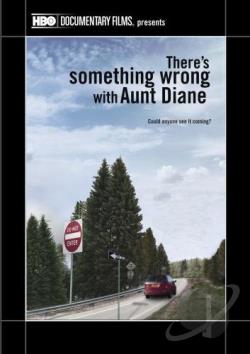
There's Something Wrong With Aunt Diane: A Crime With and Without Conclusions


Some might say that this investigation and documentary are a waste. They might say there is no point in searching for answers when the evidence is so clear. In the eyes of the Schuler family, this evidence was a complete lie.

Directed by Liz Garbus, There's Something Wrong with Aunt Diane, follows the life of Diane Schuler, and her family's hardship in further investigating her involvement in the Taconic State Parkway crash of 2009.

Diane Schuler was placed with the responsibility of driving all the children home from a family camping trip in upstate NY.  It was something she was no stranger to. Diane was a dedicated mother and homemaker. She was beloved by everyone she knew. In a completely unexpected turn of events, Diane's mini van was seen traveling down the wrong side of the Taconic State Parkway. After 1.7 miles, a head-on collision ended the journey, killing Schumer, her 3 nieces,
her 2 year-old daughter, and 3 men in the other vehicle. The only survivor of the crash was her then 5 year-old son, who could only attest that his mother had trouble seeing and didn't feel well.


The Schuler family mini van after the crash in 2009
Finding high levels of alcohol and marijuana in Diane's system, her family is still in disbelief that the Diane they knew could endanger so many lives. It is a truly heartbreaking story. Diane Schuler's husband and sister-in-law continue to fight for her reputation. It is hard not to feel sympathy for Diane, with the information later given to us. The film begins with the press conference footage of her tearful husband insisting that the toxicology reports must be wrong.

This is a case filled with controversy. The victim's families are frustrated. They feel that the Schuler's insistence on clearing Diane's name as a closet drunk is a slap in the face for the victim's justice. How can you dispute the hard evidence? Could there have been a mix-up in the lab? Could there be some kind of medical issue to cause such results that we are unaware of?

Video surveillance from the gas station Diane stopped in soon before the crash appearing sober, but asking for pain relievers
Paced very well, There's Something Wrong, covers Schuler's history, interviews old friends, as well as witnesses of the accident, interspersed with a linear timeline of the incident from when she left the camp site, to the crash itself. It comes together in pieces; after we learn a new facet of Schuler's life, we get sucked back to the infamous day, seeing her inch closer to the incident. By the time you get to the moment of impact, we know Schuler's medical history, her personal life, and her family. It makes the moment that much more intense. The end is clear as soon as the film begins, but the culminating moment is so charged with suspense and tragedy, that I could not help but cry. The events plainly stated are undoubtedly horrific, but There's Something Wrong takes you on that fateful ride till it sinks into you.
Diane and Daniel Schuler
At first the documentary appears to side with the Schulers - aside from a few interviews with the victims families and witnesses of the crash. However, Garbus does not hesitate to show the meetings and desperate phone conversations where investigators and doctors double check the damning test results, only to find once again they were accurate. Even with all the pieces laid out there is an incomplete puzzle. The Schuler's testimony on Diane's life only make it harder to complete.

Sunday, November 18, 2012

The James Holmes Conspiracy: The Illuminati is the Answer to Every Question

Conspiracy theories can be fun or offensive, depending on how you look at them. They are either going to fall under the cheesy horror category, like Whitney Houston's death linked to satanism and the Illuminati; a harmless guilty pleasure. Or it could fall under the controversial, like the 911 conspiracy; the kind of thing you don't want to publicly admit you believe. In the case of James Holmes and his mass murder in an Aurora, CO movie theater, it was a surprise to me that anyone had a conspiracy theory on this to begin with.

Thrown together in August of 2012, Mark Howitt's The James Holmes Conspiracy, is a roughly edited, comical Power Point presentation with the ultimate goal of promoting the 2nd Amendment. I was duped into watching this because the doc was listed on a website with legitimate movies and TV shows. Howitt has a Youtube account full of documentaries he's made, and it looks like that's the venue they should remain in. Aside from hokey visuals used to drive points home, most of Howitt's footage is not even his own. It's a classic Youtube low-fi documentary. He conducts no interviews himself.  For five minute blocks at a time other footage is used, from shows like Dateline and FOX News, and I assume other documentaries which Howitt does not cite. Using news footage in a documentary is fine, but these were long unedited cuts. It appeared this was a rough draft, maybe even just the research stage, of his documentary.  Since it was made only a month after the shootings took place, it is clear there was a sense of urgency to produce it.

Logical progression...
In a nutshell, what Howitt is trying to prove about the Aurora Shootings is that the US Government and whoever controls the banks this week, wanted to accomplish three things: ruin the life of James Holmes, ruin the life of his father, Robert Holmes, and have an excuse to repeal the 2nd Amendment.

James Holmes was a "promising scientific candidate" in the field of neuroscience. The government logically wanted to snuff that candle, so they brainwashed him and endangered the lives of over one hundred people.

Robert Holmes created an algorithm that traces money back to it's source. He was scheduled to testify in the court case of the LIBOR banking scandal. In retaliation, Robert's son was brainwashed, and murdered 12 people, injured 58. As usual this was the best roundabout plan the Illuminati could come up with.

And while the Illuminati are working on their agenda, why not help the overwhelmingly liberal US government use this horrible event as a jumping point for gun law restriction?

Please take note that much of this has been said in complete sarcasm, as I do not think any of these scenarios are possible. If the government is so powerful, why didn't they just murder or brainwash Robert Holmes? Were they bored?

There are so many things wrong with this documentary in style and in coherence. It might not even be worth reviewing or complaining about. It is what it is I suppose, but still something I want to share regardless. I can only summarize all the flaws; there were just too many.  Below are my favorite screen shots from The James Holmes Conspiracy, to make my point.

Random visual within the first five minutes, great.
This part of the film was hilarious! Bill Clinton standing still for makeup. Spooky.

I hate to burst your bubble, but Illusions of time are not actually time travel. Note the use of the word "illusions."
Lead, Saturn, Time? This Google search is presented to the viewer in order to explain something, but it definitely fails at that. Except we do learn that Holmes trained at Lead Valley Range which of course means... wait, what were we talking about?


Meant to show that Holmes began to pay less attention to his studies. Doesn't give a S#%T!

Segments of The Manchurian Candidate were rampant in this documentary. I almost forgot that was a fictional movie for a second, and then I realized this entire documentary is fictional anyway, so just throw in whatever movie clips will make your point.

Was Holmes a lone wolf or was there an accomplice? Did he play Majic The Gathering? These are questions that need to be answered.

Basically played five straight minutes of the Vice documentary about the mind control drug Scopolamine, where the only visuals Vice had were wide shots of Bogota.

Let's talk about Fast and Furious for 10 whole minutes!

Howitt remarks how the Holmes story is "strangely similar to The Dark Knight Rises. " You are then forced to watch the entire preview without any further analysis. 

The James Holmes Conspiracy (2012 Full Documentary) from Multiscan on Vimeo.

Despite all this, I do recommend this documentary if only for a laugh, and the few bits of info that are actually thought-provoking. For instance, the extra gas mask found lying in the parking lot of the movie theater: who did it belong to and why was it there? Why did the chief of police skirt questions about the video survalence footage? Those were the only two things I cannot explain. Everything else about this case seems to be the result of a guy that just went off the deep end and used his college grant money to buy a bunch of weapons. I'm sure if you have a clean record and good credit history it's pretty easy to plan a mass murder. That last statement was not sarcastic.